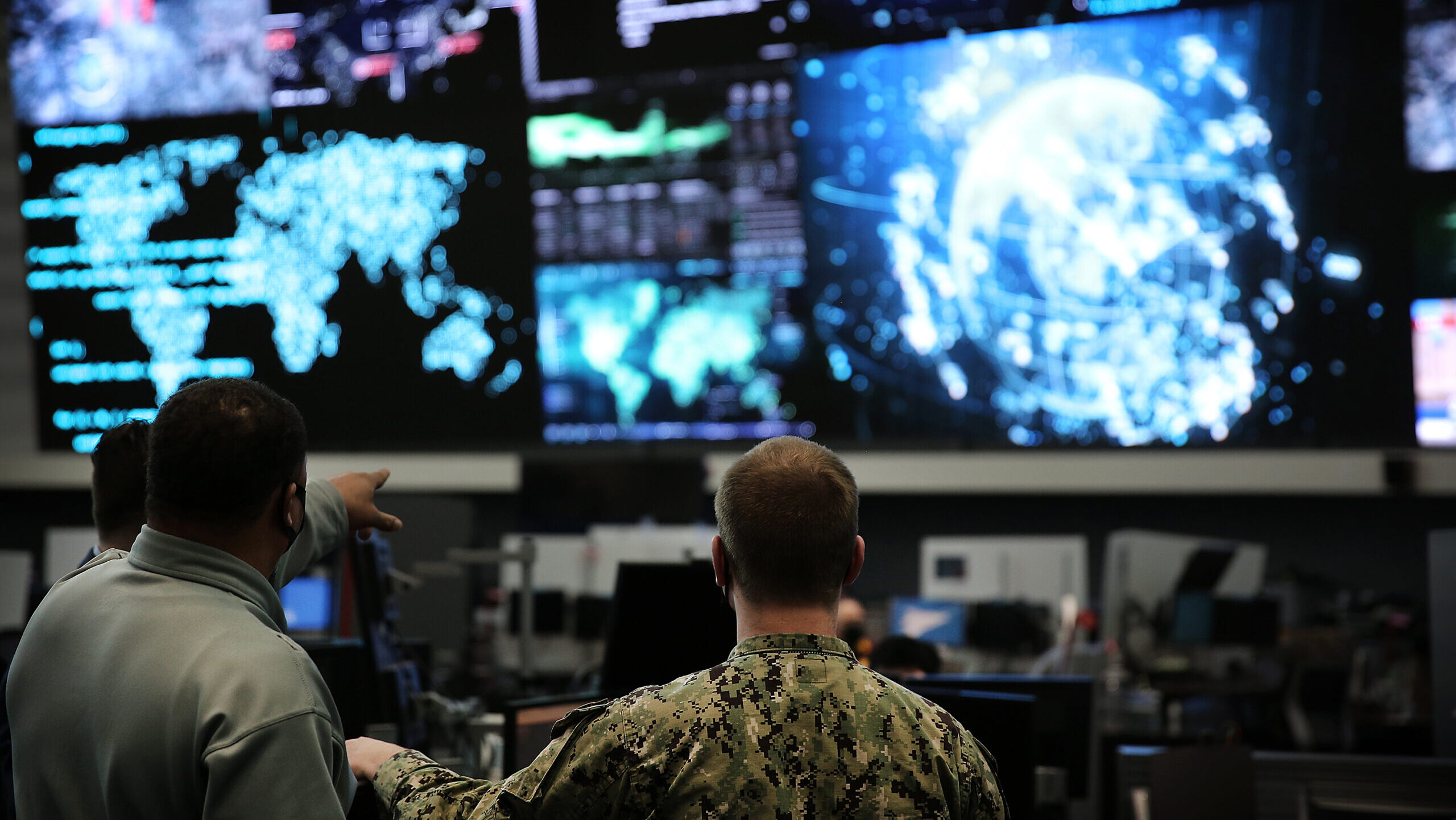
‘It’s going to be huge’: Cyber Command gains new authorities to hire & buy
Granted by Congress in the 2022 defense bill, the new authorities let Cyber Command handle matters traditionally reserved for the armed services.
Granted by Congress in the 2022 defense bill, the new authorities let Cyber Command handle matters traditionally reserved for the armed services.

The topline is higher than either the HASC ($839 billion) or SASC ($847 billion) had sought in their initial versions of the language, and includes $816.7 billion for the Pentagon and $30.3 billion for nuclear activities in the Department of Energy.


Traditional thinking about how to protect facilities must adapt to new threats such as drones or downstream attacks.

The Senate version of the 2022 defense appropriations bill also includes $50 million, a House aide explained, but the House version only includes $5 million.

Reagan Institute warns of "inadequate" investments, "exceedingly fragile" supply chains, and "insufficient" accountability of government officials, among other US weaknesses.

Lt. Gen. Moore didn't provide details, but later said, "China is the number one priority for DoD. Therefore, it's [CYBERCOM chief] Gen. Nakasone's number one priority."
"If there's one overarching theme of our approach this year, it's to transform where we're heading and focus on technology and innovation and how to start using that better," HASC Chair Smith said in opening remarks.


Decentralized Embodied Collaborative intelligence enables better reconnaissance, logistics and combat capabilities.